

Even in today’s digital era, word-of-mouth marketing remains a highly effective and cost-efficient method for rapidly boosting brand awareness and visibility, as people tend to place greater trust in recommendations from family, friends, or authentic influencers than they do in advertisements.
This article highlights some of the best word-of-mouth marketing examples. they strategies employed by various brands—strategies that enabled them to maximize their reach, extend brand awareness and visibility to the widest possible audience, and ultimately achieve significant growth.
Table of Contents
Impotence of word of mouth marketing examples
Word-of-mouth marketing is crucial for businesses because it serves as a highly effective strategy for boosting brand recognition and increasing sales. Through this approach, brands engage with customers face-to-face, thereby creating a deeper impact on their minds. This fosters long-term customer loyalty and significantly enhances both trust and credibility.
Word-of-mouth marketing offers several additional benefits as well, such as reducing the need for extensive promotional spending, increasing customer engagement, and building a community of dedicated brand advocates.
The Overview
In a competitive market, word-of-mouth marketing is an effective approach that is proving instrumental for businesses looking to build customer trust, enhance brand visibility, and achieve sustainable growth.
This blog provides comprehensive guidance on word-of-mouth marketing, enabling you to scale your business to its maximum potential. It covers key aspects such as specific strategies and how they function, the associated benefits, real-world examples, the main types of word-of-mouth marketing, and how to effectively drive it
8 best word of mouth marketing examples
1. Dropbox — Referral rewards that exploded growth ~ Dropbox is a renowned cloud storage platform whose primary objective is to securely store files, photos, documents, and important data. As a prime word of mouth marketing examples , they achieved explosive growth by utilizing a referral rewards system. The concept was simple: when existing users referred friends and family to join the platform, they received free additional storage in return. This strategy motivated users, prompting them to naturally recommend the service to others.

2. Starbucks — Social sharing through personalization ~ Starbucks is a coffee brand that successfully leveraged personalization within its word-of-mouth marketing strategy to boost brand awareness and customer engagement. To achieve this, Starbucks implemented unique ideas—such as writing customers’ names on coffee cups and adding customized messages—along with various other initiatives designed to make customers feel genuinely special. Consequently, people began taking photos of their cups and sharing them on social media, thereby generating free publicity for the brand.
3. Tesla — Customers became evangelists ~ Tesla is a popular company that manufactures electric vehicles and cars. Its innovation, advanced technology, and eco-friendly transportation make the company particularly appealing. To boost brand visibility and credibility—serving as a prime example of word-of-mouth marketing—the company ensured a seamless customer experience; this strategy not only fostered trust but also transformed customers into brand advocates and promoters. Consequently, this approach attracted new buyers and naturally facilitated business growth.
4. Apple — Product launches people talk about ~ Apple is a globally renowned technology company that manufactures smartphones, laptops, smartwatches, and other premium gadgets. They have executed word-of-mouth marketing in a highly unique manner, generating curiosity and anticipation for their products so that excitement spreads naturally across social media, YouTube videos, and daily conversations—a strategy widely regarded as the most effective way to boost sales.
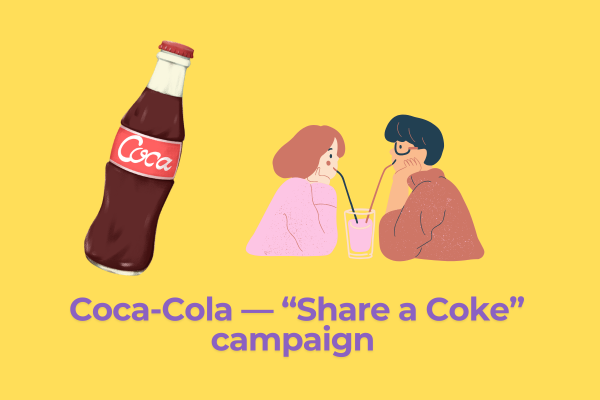
5. Coca-Cola — “Share a Coke” campaign ~ Coca-Cola is a soft drink company renowned for its strong branding and creative marketing campaigns. As a prime example of word-of-mouth marketing, Coca-Cola’s “Share a Coke” campaign involved printing common names on its bottles. This initiative fostered personalized experiences, naturally prompting people to share photos of the bottles on social media, give them to family and friends, and engage in conversations that spread organically.
6. WhatsApp — Utility-driven sharing ~ WhatsApp is a popular messaging app renowned in the realm of word-of-mouth marketing examples for its “Utility-Driven Sharing.” To strengthen its presence among users, WhatsApp made communication simple, fast, and convenient; furthermore, it identified and effectively fulfilled their daily needs. This approach fostered trust and credibility among users, leading to significant achievements in brand awareness and organic growth.
7. Uber — Referral credits ~ Uber is considered a highly successful example of word-of-mouth marketing, having employed a referral-based reward strategy to attract new users and keep existing ones engaged. This strategy incentivized users to share the contact details of their friends, family, and colleagues, in exchange for which they received rewards; consequently, this approach made customer acquisition both rapid and cost-effective.

8. TikTok — Viral creator ecosystem ~ TikTok is a popular online short-video platform centered on entertainment, trends, and creative content, and it is particularly renowned for its word-of-mouth marketing strategies. Through its viral creator ecosystem, TikTok encourages its audience to share content and propagate trends, thereby fostering an organic increase in brand awareness. Furthermore, when creators produce entertaining or informative videos showcasing a brand’s products or services, the audience tends to perceive the brand as more trustworthy.
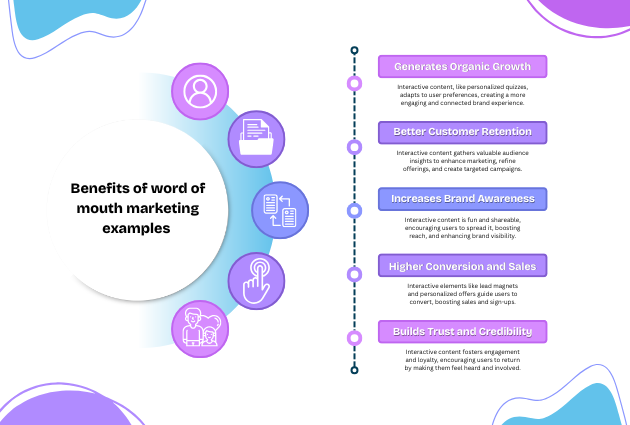
Benefits of word of mouth marketing examples
Builds Trust and Credibility _ Building trust and credibility is a key benefit of word-of-mouth marketing, as it enables a brand to receive positive reviews for its products and services directly from its customers. This marketing approach proves highly effective in achieving long-term growth. To cultivate trust and credibility, a brand takes its promises seriously, consistently maintains the quality of its products and services, and ensures a seamless customer experience; this serves to alleviate customer doubts and foster a positive brand image in their minds.
Generates Organic Growth _ A significant benefit of word-of-mouth marketing is that it facilitates organic growth—a process in which a brand expands naturally without relying on paid advertising. To achieve this organic growth, brands address their audience’s desires through their products and services, thereby ensuring customer satisfaction. This creates opportunities to attract new customers while garnering continuous, natural attention for the business.
Increases Brand Awareness _ Word-of-mouth marketing is an effective and powerful method for organically increasing brand awareness. In this approach, customers engage in positive discussions about the brand, causing information to spread continuously from one person to another. This process further strengthens the brand’s identity—a factor that proves crucial for business growth in the long run. As awareness grows, the brand is able to easily reach a wider audience, thereby creating new opportunities.
Higher Conversion and Sales _ Achieving higher conversion rates and sales is a key benefit of word-of-mouth marketing. To realize this, brands strive to make the customer experience seamless and superior—continuously refining it—so that customers naturally generate positive conversations. This, in turn, attracts new customers and boosts their confidence levels. Ultimately, this approach accelerates the buying process, leading to an automatic surge in sales.
Better Customer Retention _ Word-of-mouth marketing plays a crucial role in customer retention. This marketing approach fosters long-term relationships with existing customers, thereby encouraging them to repeatedly use products or services. To make this approach even more effective, businesses consistently ensure customer satisfaction and simplify the buying process—strategies that significantly boost trust.
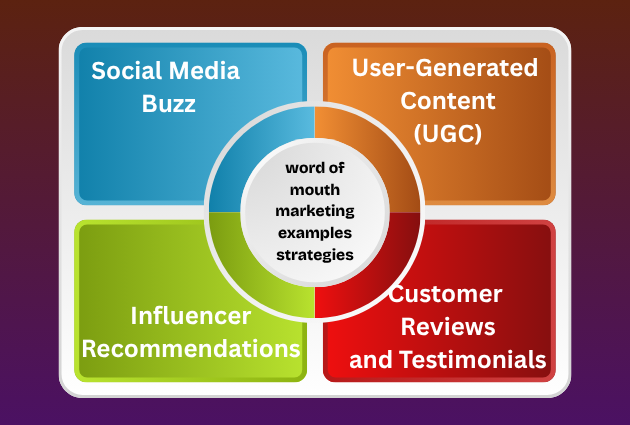
Top 4 word of mouth marketing examples strategies that actually work
Social Media Buzz – Social media buzz is a smart and cost-effective strategy that rapidly boosts brand awareness through online discussions, shares, comments, likes, and recommendations. Its primary objective is to generate excitement and engagement among the audience, thereby naturally attracting others to the brand. To build strong social buzz, businesses engage in activities such as consistent posting, conducting polls, and promptly responding to comments.
User-Generated Content (UGC) – User-Generated Content (UGC) is an effective word-of-mouth marketing strategy in which a brand’s existing customers act as promoters and supporters on its behalf. In this strategic approach, existing customers create and share content—in the form of photos, videos, reviews, testimonials, social media posts, stories, or blogs—regarding the brand’s products or services across various platforms; this boosts the brand’s organic reach and eliminates the need for additional promotional efforts.
Influencer Recommendations – Influencer recommendations constitute a smart and powerful marketing strategy in which brands engage popular creators, bloggers, social media personalities, or niche experts to promote their products or services, thereby cultivating interest and trust among their target audience. This approach is more effective than traditional advertising because audiences place greater trust in authentic recommendations—and trust, in turn, strongly influences purchasing decisions.
Customer Reviews and Testimonials – Customer reviews and testimonials constitute a game-changing strategy primarily aimed at enhancing a brand’s credibility and fostering trust. Within this strategic framework, authentic customer reviews—encompassing real-life experiences, opinions, and feedback—expedite the decision-making process for other potential buyers. Furthermore, testimonials provide a clear and vivid portrayal of product quality and the overall customer experience, thereby ensuring that prospective buyers gain a clear understanding and feel a boost in their confidence. The combined application of these two approaches effectively elevates trust levels and significantly boosts brand awareness.
Frequently Asked Questions of word of mouth marketing examples
What is word of mouth marketing examples
Word of Mouth Marketing is an impactful and game-changing strategy, the primary objective of which is to generate and sustain customer satisfaction and positive experiences. A major advantage of this strategy is that when customers provide positive feedback about a brand to others, brand awareness and customer reach naturally begin to expand, and brand trust is simultaneously built.
Main types of word of mouth marketing Examples
Word of mouth marketing example types play an important role in customer communication and trust building. There are different types of marketing which act according to the channels, the types are Referral Marketing, Customer Reviews and Ratings, Social Media Buzz, Influencer Recommendations, User-Generated Content (UGC), Brand Advocacy Marketing, Viral Marketing, Community Marketing, Testimonial Marketing, Employee Advocacy Marketing
Word-of-mouth marketing statistics
1. 82% of marketers utilize word-of-mouth marketing to boost brand awareness, as it generates five times more sales compared to traditional advertising.
2. 83% of people trust a brand based on recommendations from friends and family.
3. People share a positive brand experience with approximately 10 to 11 other individuals.
4. By employing word-of-mouth marketing, marketers reduce customer acquisition costs while minimizing additional advertising expenses.
5. Referral programs enhance both customer engagement and brand visibility.
How to brand word of mouth marketing spreads online
Word-of-Mouth Marketing Examples: Selected ideas for spreading a brand online that are highly effective.
- Social Media Sharing
- Trending Hashtags and Challenges
- Online Communities and Forums
- Email and Message Sharing
- Memes and Entertaining Content
- Emotional Storytelling
- Product Unboxing and Reviews
- Online Contests and Giveaways
- Brand Communities
- Comment Section Conversations
- Exclusive Insider Information
- Live Streams and Product Demos
- Podcast and Video Discussions
- Limited-Time Offers Sharing
How to drive word-of-mouth marketing
Deliver Amazing Customer Experiences ~ The brand focuses on providing customers with memorable and positive experiences so that satisfied customers become promoters and supporters of the brand.
Encourage Customer Reviews and Feedback ~ Request or encourage customers to share reviews, ratings, and feedback, as positive reviews are highly effective in building trust and provide opportunities for business improvement.
Create Shareable Content ~ Create content—whether interesting, emotional, humorous, or informative—that is relatable and easily shareable, thereby engaging the widest possible audience; examples include social media posts, videos, memes, contests, or useful tips.
Reward Referrals and Loyal Customers ~ Through a referral program, offer existing customers rewards such as discounts, cashback, or free gifts so that they are happy to share the brand with their family, friends, and colleagues—an effective method for brand promotion.
Build Strong Community Engagement ~ Remain active with customers on a daily basis—by replying to comments, hosting live sessions, or organizing customer appreciation activities—in order to build long-term relationships with your customer base.