
In a highly competitive market, brand awareness serves as the backbone for any business, as it determines the level of recognition and familiarity surrounding a product—specifically, how many people know of it and remember it.
This challenge can be addressed through a brand awareness marketing strategy, which is essential for influencing purchasing decisions and maintaining a leading position in the market.
Table of Contents
Summary
In today’s competitive market, brand awareness is crucial, as consumers often opt for brands they already recognize and trust; furthermore, awareness serves to strengthen a brand’s market presence.
This article provides an in-depth analysis and explanation of valuable and practical brand awareness marketing strategies, designed to facilitate the scaling and growth of your business.
Additionally, it offers a detailed explanation of the benefits of brand awareness, how it functions, and the various techniques and types associated with it.
What is brand awareness marketing strategy
Brand awareness is a strategic marketing approach utilized by brands to communicate their name, products, and values to their target and potential audiences. Its objective is to cultivate a strong brand image in the minds of the audience, and it proves highly instrumental in helping the brand stay one step ahead of its competitors.
Types of brand awareness
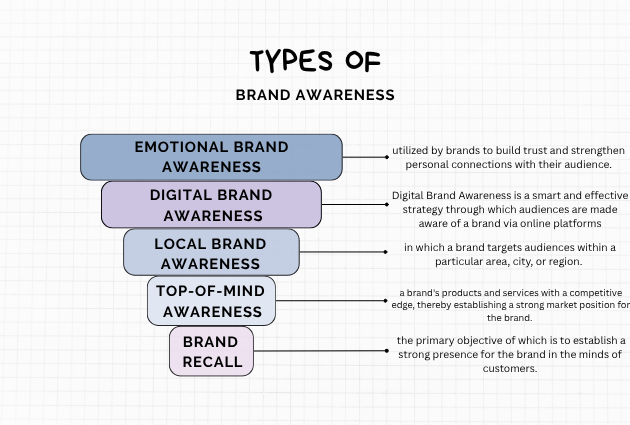
Top-of-Mind Awareness – Top-of-Mind Awareness is a powerful form of brand awareness marketing strategy that provides a brand’s products and services with a competitive edge, thereby establishing a strong market position for the brand. To cultivate this awareness, brands utilize social media platforms, SEO, and content marketing to engage regularly with their audience, aiming to secure the top spot in their minds.
Local Brand Awareness – Local Brand Awareness is a specific type of brand awareness marketing strategy in which a brand targets audiences within a particular area, city, or region. This form of awareness proves to be particularly effective for small businesses, startups, and local shops. To build Local Brand Awareness, businesses promote their brands by utilizing local SEO, social media advertisements, pamphlets, banners, and word-of-mouth marketing.
Digital Brand Awareness – Digital Brand Awareness is a smart and effective strategy through which audiences are made aware of a brand via online platforms such as Instagram, Facebook, YouTube, or Google. To achieve this, various strategies—including social media marketing, search engine optimization, paid advertisements, and influencer marketing—are employed, enabling the brand to reach a maximum audience and generate widespread awareness.
Brand Recall – Brand recall is a crucial component of a brand awareness marketing strategy, the primary objective of which is to establish a strong presence for the brand in the minds of customers. Consistency proves to be a key factor in the process of building brand recall; this is achieved by utilizing catchy slogans, jingles, and emotionally resonant advertisements across the brand’s advertising, messaging, and visual identity—thereby leading to an automatic increase in leads and sales.
Emotional Brand Awareness – Emotional Brand Awareness is a core and essential component of a brand awareness marketing strategy, utilized by brands to build trust and strengthen personal connections with their audience. Storytelling plays a pivotal role in cultivating this awareness; through emotional advertisements, real-life narratives, and engagement with social causes, a brand establishes an emotional bond with its customers—a process that ultimately fosters long-term loyalty.
10 effective brand awareness marketing strategy
User-Generated Content Campaigns ~ User-Generated Content (UGC) campaigns constitute an effective brand awareness marketing strategy that encourages the audience to create content for the brand—content that is more impactful than paid promotions and naturally fosters trust and authenticity. Content created by real users provides the audience with a genuine experience, thereby organically boosting engagement and strengthening the brand’s visibility.
Influencer Collaborations ~ Influencer collaboration is a game-changing strategy for modern businesses, wherein brands collaborate with creators and influencers to reach their target audiences—an approach that feels more natural and trustworthy compared to traditional advertising. Influencers and creators represent a brand through a unique style and tone, thereby sustaining audience interest and fostering organic growth in engagement.
Content Marketing (Blogs, Videos, Reels) ~ Content marketing is a proven strategy for building brand awareness, wherein businesses provide their target audience with useful, relevant, and engaging content that makes them feel valued. By consistently delivering such value, businesses achieve organic growth, which, in turn, helps the brand expand in a sustainable manner. Through various forms of content—such as blogs, videos, and Reels—businesses reap benefits such as building trust, increasing engagement, and fostering brand loyalty.
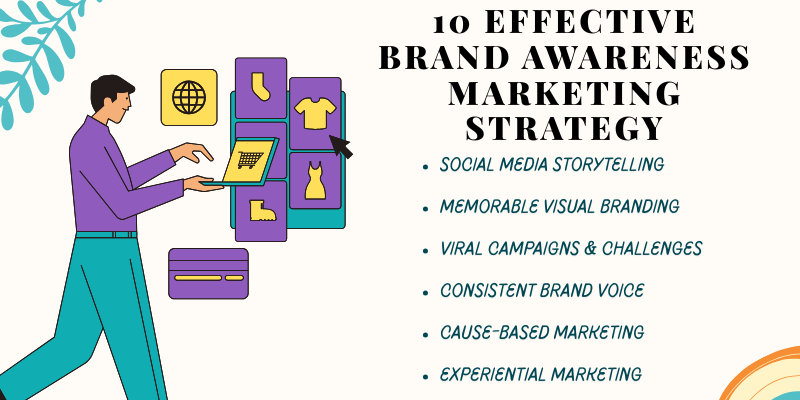
Social Media Storytelling ~ Social media storytelling is a powerful and effective marketing approach that is highly instrumental in generating brand awareness while simultaneously fostering an emotional connection. Brands utilize this strategy to showcase their values, journey, and personality. By sharing their stories with honesty and transparency, brands build long-term relationships with customers—a process through which trust is also automatically established.
Memorable Visual Branding ~ Memorable Visual Branding is a smart and impactful strategy that proves highly effective in boosting a brand’s identity. Through this strategic process, a brand utilizes distinct designs and color schemes to cultivate a clear and professional image—one capable of easily triggering the human mind to grab attention and establish a strong, long-lasting impression of the brand.
Viral Campaigns & Challenges ~ Viral campaigns and challenges constitute an effective strategy for rapidly boosting brand awareness, wherein brands create high-quality content to engage their audience, encouraging them to share the content and actively participate. Participation multiplies engagement and leads to an exponential increase in reach. Since these campaigns are easy to understand, the content becomes highly shareable, thereby generating massive visibility within a short span of time.
Consistent Brand Voice ~ A consistent brand voice is a truly effective strategy, the primary objective of which is to make a brand’s identity clear and recognizable so that the audience can easily connect with it. When the tone of communication, language style, and messaging remain consistent across different platforms, it makes the audience feel comfortable and fosters a sense of familiar trust.
Cause-Based Marketing ~ Cause-based marketing refers to building brand awareness in alignment with a social or environmental cause, wherein a brand expresses its values through actions that are valuable to society. This approach resonates as meaningful and inspiring to the audience, while also strengthening emotional connections with them. This strategy is grounded in tangible actions, which automatically boosts the brand’s credibility.
Experiential Marketing ~ Experiential marketing is a unique and engaging strategy that transforms storytelling into real-life interactions, enabling the audience to experience a sense of emotional and personal connection, thereby allowing them to easily bond with the brand. A key advantage of experiential marketing is its ability to influence the audience’s future decisions.
Referral Programs ~ Referral programs represent an engaging and dynamic strategy through which brands leverage their existing customers to promote the brand—via word of mouth—to their friends, family members, or colleagues. This strategy attracts a high-quality audience, proving highly effective in building trust. Through referral programs, brand awareness expands in a more authentic and sustainable manner, thereby driving business growth organically.
How does a brand awareness marketing strategy work?
The 10 brand awareness marketing strategies mentioned above require proper guidelines to be utilized effectively. To ensure easy comprehension, these guidelines have been presented as step-by-step instructions, which are provided below.
Define your brand identity – Defining a brand identity is essential because, in a highly competitive market, it provides you with a distinct identity and cultivates an image, feeling, and perception in the minds of your audience—one that encompasses your values, mission, and vision. To strengthen a brand identity, there are several key visual elements—such as colors, typography, and design style—that work effectively by aligning seamlessly with the brand’s core personality.
Get visible where your audience already is – At this stage, you identify where your target audience spends the majority of their time, enabling you to establish a brand presence within their spaces through multiple strategies—a natural approach to engaging potential customers. This core concept is grounded in convenience and familiarity, whereby the brand becomes more relatable and engaging by maintaining consistent visibility.
Create consistent messaging – To ensure the success of a brand awareness marketing strategy, a brand must consistently craft and deliver clear messaging to its audience. This ensures that the brand’s personality remains stable and consistent, regardless of which platform the audience uses to engage with the brand. Clear messaging strengthens communication, enabling people to understand and recall the brand more effectively.
Leverage reach multipliers – Reach can be significantly multiplied by leveraging the power of collaboration. In this process, brands collaborate with creators or influencers who already possess an established audience. When a creator or influencer promotes a brand, both trust and reach increase organically. Furthermore, if the content is engaging, relatable, or valuable, brand awareness and reach grow at an accelerated pace.
Measure awareness (indirectly) – Measuring awareness requires various elements—such as reach, impressions, brand searches, social mentions, and website traffic—along with a focus on audience behavior. Positive results across all these indicators provide a strong signal that awareness is being successfully built. Overall, measuring awareness helps foster familiarity and build trust with the audience.
5 ways of increasing brand awareness marketing strategy
This brand awareness marketing strategy analyzes and explains five methods that actually work. Let’s understand them through a few key points.
Social Media Marketing – Social Media Marketing is an effective method for increasing brand awareness, wherein brands utilize online platforms—such as Instagram, Facebook, and LinkedIn—to directly reach their target audience and promote their products and services. The primary objective of this strategy is to build strong connections with the audience and keep them engaged through high-quality content.
Influencer Marketing – Influencer marketing is a powerful digital strategy that businesses utilize to build trust and authenticity. In this process, brands collaborate with popular social media personalities, content creators, or influencers to promote their products and services, as this approach is perceived as more trustworthy than traditional advertising. Consequently, this boosts the brand’s visibility, credibility, and sales.
Giveaways & Contests – Giveaways and contests constitute a smart and cost-effective marketing strategy for building brand awareness, with the primary objective of increasing engagement and reach. In this process, brands offer audiences the opportunity to win free products, discounts, or rewards through contests, thereby enhancing both the brand’s visibility and recognition. In giveaways, audience attention is captured through the allure of attractive prizes.
Search Engine Optimization (SEO) – Search Engine Optimization (SEO) is a popular digital marketing strategy that serves as one of the fastest ways to increase brand awareness. Its primary objective is to generate organic traffic by helping a brand’s website rank at the top of search engine results. Achieving this requires the use of the right keywords combined with high-quality content that effectively addresses users’ problems or queries; additionally, the website must feature fast loading speeds, mobile-friendliness, and easy navigation.
Content Marketing – Content marketing is a powerful brand awareness strategy in which brands attract and engage their audience through valuable, relevant, and consistent content. Content types include blogs, videos, infographics, social media posts, podcasts, e-books, etc. When executed with smart planning, creativity, and consistency, content marketing provides a rapid boost to brand awareness, audience engagement, and business growth.
Benefits of brand awareness marketing strategy
Builds Trust and Credibility – Building trust and credibility in the minds of customers is the primary goal of any business. This objective can be achieved through an effective brand awareness marketing strategy. To build trust, brand content maintains clear messaging, consistent visuals, and a uniform tone across various platforms. Positive customer reviews, testimonials, and social proof are utilized to boost credibility.
Increases Customer Recognition – One of the key benefits of a brand awareness marketing strategy is the boost it provides to customer recognition. This is because it creates a strong mental image of the brand in the minds of the audience, thereby offering a competitive edge. To cultivate this advantage, the brand name and logo—along with catchy taglines and unique designs—are maintained consistently across social media, websites, and advertisements. This ensures that the audience can easily identify the brand, fostering a strong impression and driving long-term business growth.
Boosts Sales in the Long Run – One of the powerful benefits of a brand awareness marketing strategy is that it steadily increases sales over the long term. To achieve this, brands employ a variety of strategies and activities—such as leveraging social media, advertisements, content, or word-of-mouth—to boost trust and familiarity, foster a positive environment among the audience, and focus on driving repeat purchases, among other initiatives.
Supports Other Marketing Efforts – Another benefit of a brand awareness marketing strategy is that it supports other marketing efforts in generating maximum results—for instance, by organically increasing website traffic through Search Engine Optimization, boosting likes, shares, and engagement in Social Media Marketing, and delivering better performance at a lower cost in paid advertising. Overall, a strong sense of brand awareness enables marketing strategies to perform more effectively.
Helps in Business Expansion – A major benefit of a brand awareness marketing strategy is that it proves highly useful in facilitating the easy and rapid expansion of a business. It involves building a strong brand identity, thereby minimizing both the time and risk associated with the expansion process. Furthermore, strong brand awareness instills the confidence to forge partnerships and collaborations with other businesses, thereby creating new opportunities.