

Bloggers, creators, and influencers craft their content according to search engine optimization (SEO) algorithms to maximize reach. Keyword optimization plays a crucial role in this process by helping web page content rank at the top of search results.
Proper keyword optimization offers numerous benefits, such as enhancing website visibility, conversion rates, and user experience, while also helping to attract targeted traffic cost-effectively.
In this blog, you will learn in detail about the benefits of keyword optimization, how it works, and the significance of keywords in SEO.
Table of Contents
Key takeaways
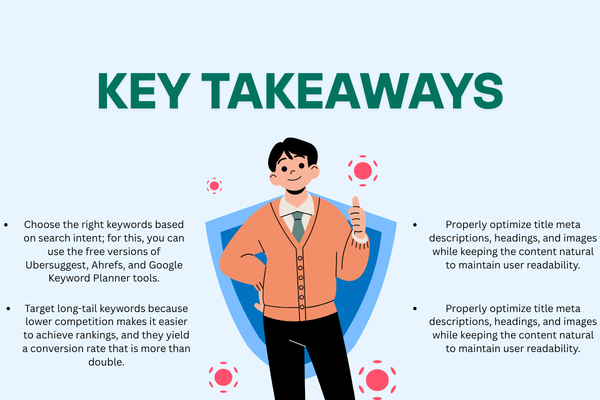
- Choose the right keywords based on search intent. For this, you can use the free versions of Ubersuggest, Ahrefs, and Google Keyword Planner tools.
- Target long-tail keywords because lower competition makes it easier to achieve rankings, and they yield a conversion rate that is more than double.
- Avoid keyword stuffing and create content that is useful, original, and helpful—which is essential for ranking.
- Properly optimize title meta descriptions, headings, and images while keeping the content natural to maintain user readability.
- Track keyword rankings, clicks, and impressions, and optimize them. You can use the free Google Search Console tool.
What is keyword optimization
Keyword optimization is a component of SEO (Search Engine Optimization) strategy that involves the strategic use of appropriate and relevant keywords within website content, making it easily understandable for both search engines and users. Its primary objective is to enhance the content’s search visibility by incorporating keywords in a relevant and natural manner.
Benefits of keyword optimization
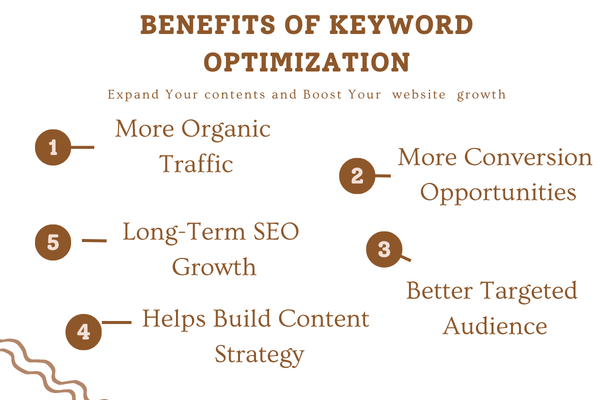
More Organic Traffic – One of the key benefits of keyword optimization is increased organic traffic, which directly impacts website authority. Greater visibility attracts more visitors, thereby creating new opportunities—even on a limited budget. A major advantage of organic traffic is that users arrive at the website while actively searching for specific information, solutions, products, or services; when their search intent is effectively satisfied, the likelihood of them exploring other content pages also increases.
More Conversion Opportunities – One of the key benefits of keyword optimization is that it subtly increases conversion opportunities. When you smartly incorporate relevant and intent-based keywords into your content, you attract users who are searching with a specific intent—seeking information or solutions. By targeting these users, you can convert them into customers, subscribers, leads, or buyers. Overall, it is a powerful strategy that understands the searcher’s needs and guides them toward taking meaningful action.
Better Targeted Audience – One of the most useful benefits of keyword optimization is that it allows you to increase website traffic by improving audience targeting. For instance, you can write blog posts around specific keywords—such as “small business digital marketing strategies“—that attract an audience with particular needs and interests. You can then transform this audience into taking meaningful actions, such as visiting multiple pages, subscribing to a newsletter, getting in touch, or purchasing a product.
Helps Build Content Strategy – Another powerful benefit of keyword optimization is that, alongside improving website visibility, it significantly aids in intelligently building a content strategy—which plays a crucial role in your growth. Developing a content strategy offers numerous advantages, such as identifying, updating, and improving existing content; segmenting content to suit diverse audience needs; and discovering content gaps to streamline the scheduling of future content publication.
Long-Term SEO Growth – A key, game-changing benefit of keyword optimization is that it boosts long-term SEO growth, laying the foundation to enhance a website’s authority and visibility; this is because content must be designed in alignment with SEO algorithms to be properly optimized. Achieving long-term SEO growth makes your content accessible via multiple relevant search queries, thereby increasing organic traffic and creating various opportunities for monetization.
Boosts Competitive Advantage – Another important benefit of keyword optimization is that it provides a competitive advantage, as multiple websites within any given niche vie for the attention and search traffic of the same audience. To achieve this, the process involves conducting proper keyword research to identify opportunities and creating useful, informative content that offers added value to the audience; this increases organic reach and visibility, thereby boosting the website’s credibility and authority.

How to do keyword optimization step-by-step?
Step 1: Research High-Intent Keywords: Before Writing The first step in keyword optimization involves researching “high-intent” keywords—terms that users type into search engines, revealing their underlying purpose or intent. When selecting the right keywords, you must consider factors such as user intent, competition, relevance, and niche-specific topics. To discover these keywords, you can utilize resources like Google Search suggestions, the “People Also Ask” section, related search options, and dedicated keyword research tools.
Step 2: Align Each Keyword With User Search Intent: The next step in keyword optimization involves closely observing user search intent to understand what users actually need and want, as different keywords related to the same topic can reflect different user intentions. The easiest way to understand search intent is to search for the specific keywords you have selected on search engines and analyze the content of the top-ranking pages; this reveals the type of answers users and search engines prefer for that particular keyword.
Step 3: Position Your Primary Keyword in H1, Intro & Early H2s: After selecting keywords based on user and search engine requirements, the next crucial step is the strategic placement of content. This involves using an H1 tag—considered the main heading—to explain the content’s topic to both users and search engines, followed by H2 headings that indicate subsections of the H1. Additionally, the primary keyword can be naturally incorporated into the URL, meta title, and meta description as needed. Ensure the content is useful for users, not just for search engines.
Step 4: Strengthen Content With Semantic & LSI Keywords: Using Semantic and LSI keywords can make your content stronger and more effective. Semantic keywords provide search engines with clarity regarding the specific topic of your content; you can identify these by analyzing “People Also Ask” sections, related searches, and competitor content. LSI (Latent Semantic Indexing) keywords are terms that cover the vocabulary and concepts associated with your primary keyword, ensuring the content is easily understandable for both search engines and users.
Step 5: Build Internal Links Using Keyword-Rich Anchor Text: Optimizing for specific keywords requires building strong internal links, and you can make these links more effective by using anchor text. Essentially, this text informs the user beforehand about the topic they will learn about after clicking the link. Incorporating anchor text into your content allows users to easily discover related material and explore further useful information on your website. Additionally, relevant internal links help establish strong connections between the various pages of your website.
Step 6: Monitor Performance & Continuously Refine Keywords: The final step involves continuously monitoring your website content’s performance and optimizing keywords over time; this is essential because SEO algorithms constantly change, and user search behavior also evolves. Key metrics used to monitor keyword performance include CTR (Click-Through Rate), impressions, clicks, and average position. You can use free tools like Google Search Console to track keyword performance.