

In today’s digital age, social influencer marketing creates trust-driven digital ecosystems that promote brands’ products and services through strategic marketing approaches, creative ideas, and authentic ways. This heading will explore its future impact.
Table of Contents
What is social influencer marketing?
Social Influencer Marketing is a smart and result-driven approach used by brands to promote their products and services and grow the brand through audience connection. Its biggest advantage is budgeting, which both small and large businesses and startups can utilize as per their budget. The main focus of Social Influencer Marketing is to generate sales by targeting the right audience, increasing brand awareness and engagement because people trust real recommendations more than ads.
how does it work
Define Goal & Target Audience__ Defining the goal and target audience is a crucial task in social influencer marketing or any digital campaign. Clear goals make it easier to measure campaign success and define the desired outcome, such as brand awareness, engagement, website traffic, lead generation, or direct sales.
Find the Right Influencer__ Choosing the right influences is also a crucial step as it has a direct impact on product/service sales as well as on brand image. It also depends on other factors like Audience Quality, Engagement Rate, Content Style and Authenticity etc. While choosing overall better influences, prioritize relevance, trust and engagement.
Content Collaboration & Promotion__ In the Collaboration & Promotion stage, the brand and influencer together create such content which appears natural and engaging to the audience. In this process, the brand clearly shows the message of its company goals and target audience. Influencers create content based on all this data. The formats of the content are like Instagram reels, YouTube reviews, unboxing videos, tutorials, live sessions, or storytelling posts.
Track Results & Optimize__ Analyzing campaign performance is crucial in social influencer marketing because tracking results and optimizing can help determine whether a strategy is working. Tracking tools include Instagram Insights, YouTube Analytics, Google Analytics, and affiliate dashboards, and future campaigns are improved based on insights by optimizing for best performance.
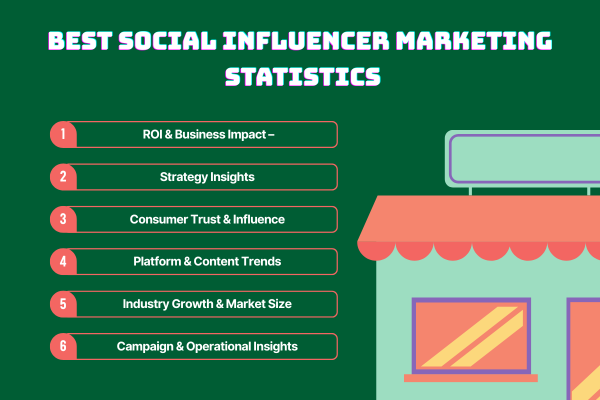
Best social Influencer marketing statistics
💡 ROI & Business Impact – Social influence marketing is used for promotion and brand awareness, as well as for direct sales and measurable ROI. This refers to the cost per acquisition (CPA) that indicates how much it costs to generate revenue. One area where influencers impact businesses is consumer trust and purchase decisions, as influencer campaigns have higher conversion rates than traditional ads.
🎯 Strategy Insights – A proper strategy planning, targeting and execution sets the foundation for business growth. Relevance and over followers are important insights in that micro influencers have a niche and loyal audience compared to nano influencers. High engagement and trust leads to better conversion rates along with long-term collaborations. More brand trust and consistent messaging builds and credibility is automatically strengthened.
🤝 Consumer Trust & Influence – Customer trust acts as a pillar in social influencer marketing. According to research, approximately 60–70% of consumers trust influencers more than traditional brand ads. This is especially strong among Gen Z and Millennials, as they are more active on social media. Transparency is also a trust-building factor, with clear disclosure and honest reviews increasing audience confidence.
📱 Platform & Content Trends – Brands prefer platforms that offer high engagement, short attention span content, and strong community interaction. Some popular platforms include Instagram, TikTok, LinkedIn, and YouTube, etc. When it comes to content trends, short-form videos (Reels, Shorts, TikTok) are the highest-performing formats. Adding neural storytelling improves performance and generates additional ROI.
📊 Industry Growth & Market Size – Globally, the influencer marketing industry is valued at $32.55 billion to $34.1 billion, growing by double digits every year. That’s why brands invest 10–20% of their digital marketing budgets in influencer campaigns. Influencers deliver engagement and higher trust to brands, while strengthening the industry infrastructure. AI-based tools and analytics software aid accurate strategy planning.
🔍 Campaign & Operational Insights – Strong planning, execution, and tracking systems can make any campaign and operational successful. Setting clear objectives for operational insights. Focusing on campaign goals such as lead generation, awareness, engagement, or direct sales makes performance measurement easier. Content approval workflows are also crucial. This defines messaging, tone, deliverables, and posting timelines.
How to impact social influencer marketing in future for businesses
In the coming times, social influencer marketing will become a medium for building trust, transparency and long-term value creation. Businesses will have to focus on strategic partnerships rather than short-term promotions in influencer marketing, which will also depend on some factors like focus on micro and nano influencers, which will improve the conversation rate in the future. Data-driven influencer selection is the backbone of influencer marketing, which will measure performance through AI tools and analytics, and other factors which can have a high impact on businesses in the future.
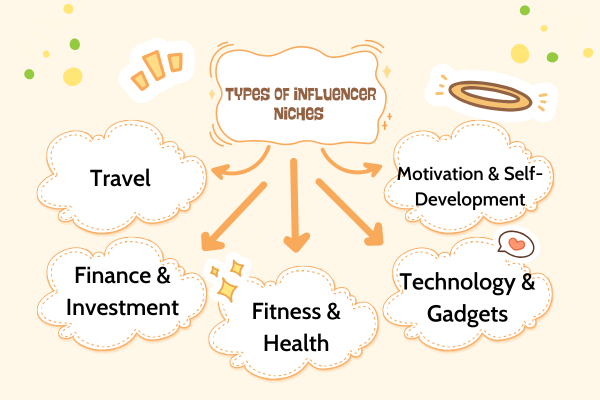
Types of influencer niches
Travel : The travel influencer niche also includes destination guides, budget travel tips, hotel reviews, local food exploration, hidden place discovery, and travel hacks. It’s perfect for those who enjoy sharing their experiences and places around the world, making storytelling crucial. Airlines, hotels, and luggage brands also sponsor them, making it a good career option.
Finance & Investment : Finance & Investment is also a broad niche. It provides knowledge about financial freedom and building a smart decision-making mindset, including case studies,research-based content and practical tips. It also becomes a highly profitable and impactful career option in the long term. Its income sources include brand deals, affiliate commissions, online courses, webinars, and YouTube monetization.
Fitness & Health : Fitness & Health This niche shares content specifically related to fitness and a healthy lifestyle, including workout routines, weight loss tips, muscle building guidance, diet plans, yoga, mental wellness, and daily healthy habits. It targets audiences who prioritize health and fitness. Transformation journeys, motivational stories, and realistic advice are shared to build strong connections and trust with audiences.
Technology & Gadgets : Technology & Gadgets is one of the trading niches that specially influences the young generation. The role of influencers and creators in this niche is to explain complicated specifications in simple and easy language. Therefore, the demand for tech content is always high. Influencers here share honest reviews, unboxing videos, comparison guides and tech tutorials. To sustain long term success in this niche, influencers have to maintain updated knowledge, honest opinions and engaging presentation along with continuous learning.
Motivation & Self-Development : Motivation & Self-Development niches are long-term professional career options that directly impact people’s lifestyles. Its process transforms audiences from negative thinking to positive thinking, for which demand is continuously increasing. The influencers below cover topics such as goal setting, time management, productivity hacks, self-confidence building, success habits, and dealing with failure, and share real-life examples, personal experiences, and practical action steps to build trust.
How to divide broad niches in micro niches
There are many ways to broadly divide niches into smaller niches, but I’ll mention a few here to provide some valuable information.
1. First, choose a broad niche, such as digital marketing, finance, and health.
2. Divide the broad niche into smaller, more specific audiences, such as students and working professionals.
3. Identify the audience’s problem and create solution-based content, such as health issues.
4. Divide into location-based micro-niches, such as national and international, or local markets.
5. Use an online platform-specific approach to segment your niche, such as Instagram or YouTube marketing.
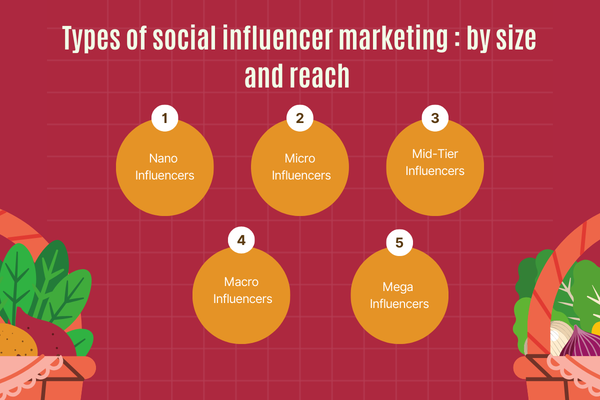
Types of social influencer marketing : by size and reach
Nano Influencers _ Nano Influencers fall at the lower end of the fan base or follower categories, typically having 1,000 to 10,000 followers. They create content solely on niche topics, such as fitness, skincare, tech reviews, books, food blogging, or local lifestyle. Personalization of followers leads to high engagement rates, making them a great option for small businesses and startups.
Micro Influencers _ After nano, come macro influencers who specialize in a specific niche such as fitness coaching, personal finance, digital marketing, fashion styling, gaming, or travel vlogging. Its biggest strength is targeting audiences who are genuinely interested in the content. Their reach is 10,000 to 100,000.
Mid-Tier Influencers _ Mid-tier influencers have strong credibility, creating impact at a regional or even national level. The combination of strong reach, solid credibility, and balanced engagement provides a valuable opportunity for brand collaborations, and their costing is relatively balanced compared to other influencers, which are preferred by mid-sized companies and growing brands. Reach ranges from 100,000 to 500,000.
Macro Influencers _ Macro influencers are popular content creators, typically with 500,000 to 1 million followers, who specifically target mass auditions. They are best for brands looking to build brand awareness, recognition, and strong positioning nationally. They are typically well-known personalities from the digital world with a strong presence.
Mega Influencers / Celebrities _ Lastly, come mega influencers, who are celebrities, athletes, actors, politicians, singers, and high-profile creators who have a reach of millions and strong real-world popularity. They create massive visibility, instantly exposing brands to millions, but their cost is quite high. They are a perfect choice for product launches, national campaigns, movie promotions, or global brand announcements.
Conclusion :-
Social influencer marketing is an effective and trust-based marketing model that emotionally connects brands and customers, with influencers playing a key role. Influencers can promote businesses from small to corporate levels, depending on their budget. Influencer marketing is explained in detail, including its definition, types, statistics, and broad niches.